One Pothole Impact and 10 Days of Precision Work: Mercedes-Benz E-Class Alloy Wheel Repair Covered by KASKO
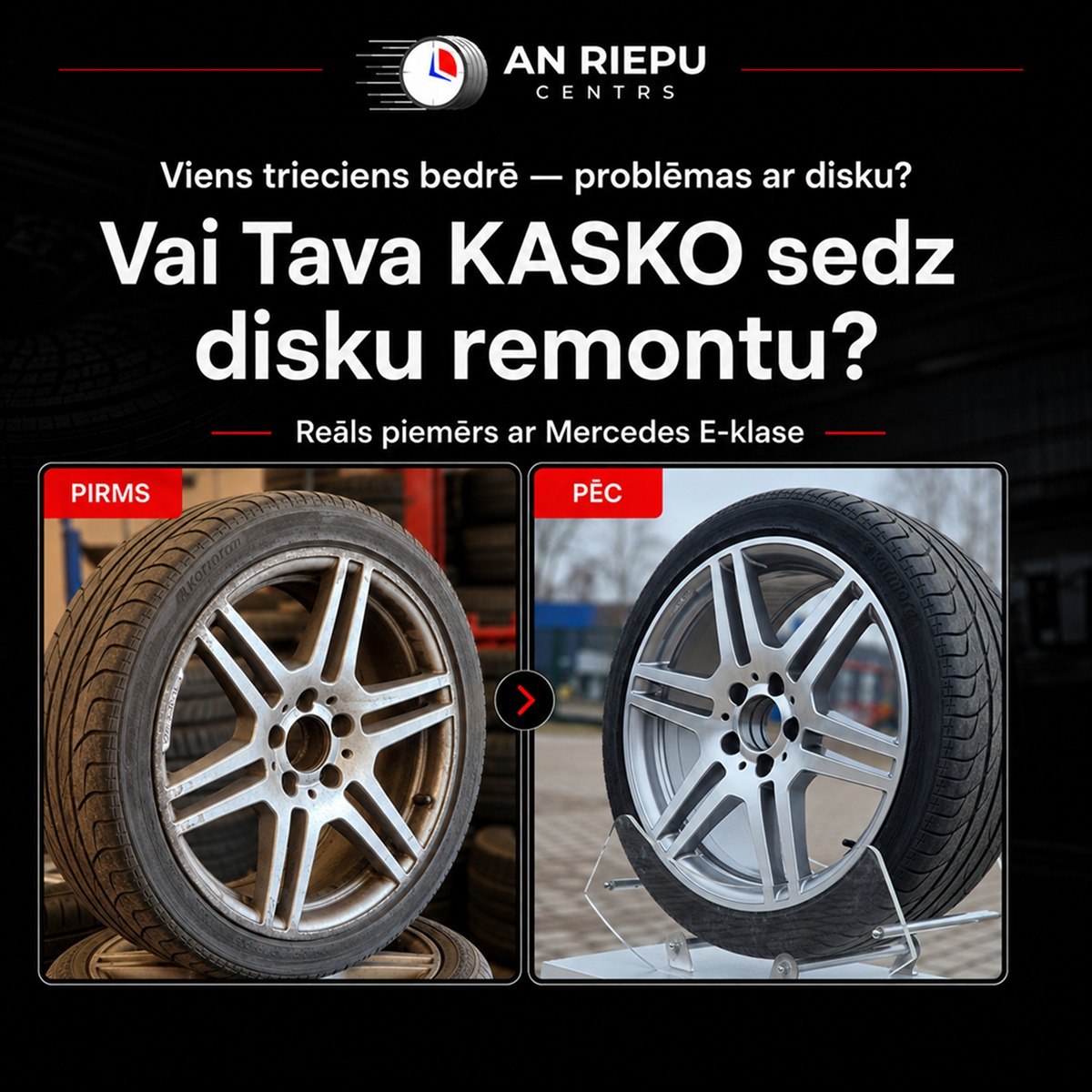
Sometimes a single hard impact with a pothole is enough to turn an ordinary journey into a technically demanding alloy wheel repair. Large-diameter alloy wheels fitted with low-profile tyres are particularly vulnerable. Because the tyre sidewall is relatively shallow, a severe impact can transfer a significant amount of force directly to the wheel. The result may be a bent rim, distorted wheel geometry or other structural damage affecting not only the appearance of the wheel, but also driving comfort and safety. That is exactly what happened to the owner of a Mercedes-Benz E-Class who contacted AN Riepu Centrs. The vehicle was fitted with original 20-inch wheels. After a severe pothole impact, one of the wheels sustained substantial damage. The “before” photographs clearly show the extent of the problem. This was not simply a cosmetic issue that could be resolved by touching up or repainting the wheel. Before any work could begin, there was a much more important question to answer: Could this wheel be safely repaired at all?
Our first recommendation was to contact the KASKO insurer
During our initial conversation, the owner told us that the vehicle had KASKO comprehensive motor insurance.
Rather than paying for the repair immediately, we advised the customer to contact the insurance company first and check whether the particular policy covered wheel damage caused by a pothole impact.
KASKO terms and claims procedures vary between insurers and individual policies, so it is important to document the incident and follow the insurer’s instructions.
In a situation like this, it is advisable to photograph the damaged wheel and tyre, record the pothole and location where it is safe to do so, register the insurance claim and establish whether approval is required before repair work starts.
Approximately one week later, the customer returned to AN Riepu Centrs.
The insurance claim had been registered, and the insurer required a repair estimate before assessing the damage and approving the work.
We carried out a professional wheel inspection, determined the required scope of repair and prepared an estimate for the insurance company.
In this particular case, the Mercedes-Benz wheel repair was approved and covered under KASKO.
Safe alloy wheel repair starts with a professional inspection
When people talk about alloy wheel repair, wheel restoration, refurbishment or painting, it is important to distinguish cosmetic damage from structural damage.
A scratched finish is one thing.
A heavily distorted 20-inch wheel following a major pothole impact is quite another.
A visual inspection alone is not sufficient before repairing a seriously damaged wheel. The wheel geometry, level of deformation and structural condition must first be assessed.
During the inspection, AN Riepu Centrs specialists assess the extent of deformation, the condition of the inner and outer rim, possible cracks and hidden damage, the condition of the spokes, overall wheel geometry and the structural integrity of the wheel.
The key question is always the same:
Will the wheel be safe to use after the repair?
We only proceed with an alloy wheel repair when the wheel can be restored to a condition suitable for safe continued use.
If the spokes are seriously damaged, the wheel structure has been significantly compromised or there are reasonable doubts about its structural integrity, we will not repair the wheel and will recommend replacement instead.
A wheel looking good in an “after” photograph is not enough.
During normal driving, wheels are exposed to considerable loads during acceleration, braking, cornering and when travelling over uneven road surfaces.
Safety therefore comes before cosmetic appearance.
In this Mercedes-Benz E-Class case, the inspection confirmed that the original 20-inch alloy wheel could be restored safely, but the amount of work required was substantial.
Alloy wheel repair, refurbishment, restoration and painting — what is the difference?
These terms are often used interchangeably, although they can describe different types and levels of work.
Alloy wheel repair generally refers to correcting technical damage to the wheel, such as deformation caused by an impact.
Wheel straightening and geometry correction may be required when a bent wheel can be safely returned to the correct shape and alignment.
Alloy wheel refurbishment or restoration is a broader process aimed at restoring the technical condition and appearance of a wheel.
Alloy wheel painting focuses primarily on renewing or changing the wheel’s surface finish and colour after the appropriate preparation work.
Depending on the condition of a wheel, a complete refurbishment may involve several stages, including inspection, straightening, geometry correction, surface preparation, restoration and painting.
However, not every wheel requires every process.
In this Mercedes-Benz case, the primary issue was serious deformation caused by the pothole impact, so restoring the wheel geometry and technical condition was the first priority.
Why does a complex alloy wheel repair require professional equipment and experience?
Repairing a badly damaged original 20-inch alloy wheel requires more than simply making the wheel appear straight again.
It requires specialist equipment, an appropriate repair sequence and considerable technician experience.
For this wheel, the deformation had to be corrected progressively. The proper wheel geometry had to be restored, the result checked during the individual repair stages, the surface prepared, the technical and visual condition restored and the completed wheel inspected again after the work was finished.
Our goal was not simply to create an impressive “after” photograph.
The goal was a technically sound and professionally completed repair.
In demanding alloy wheel repair and refurbishment work, technician experience, precision and the capabilities of the equipment being used make a significant difference.
Why did this Mercedes-Benz wheel take 10 days to repair?
Customers sometimes ask why a badly bent alloy wheel cannot simply be straightened and returned the following day.
The answer depends on the nature and extent of the damage.
With significant deformation, individual stages of the repair may need to be carried out progressively, with the wheel geometry and technical condition checked throughout the process.
Rushing a complex repair can compromise both the quality of the result and safety.
For that reason, our priority is not to complete every repair in the shortest possible time. It is to achieve the correct, high-quality and safe result.
The complete restoration process for this original 20-inch Mercedes-Benz E-Class wheel took 10 days.
Once the work had been completed, the wheel underwent a further inspection.
The “before and after” photographs show both the severity of the initial damage and the result achieved after professional alloy wheel repair and restoration.
Real cases like this demonstrate the process better than any advertising promise: the project started with a seriously damaged original Mercedes-Benz wheel and ended with a professionally restored wheel that had undergone a further technical check.
What should you do after hitting a pothole?
If a severe pothole impact is followed by vibration, tyre pressure loss, visible wheel deformation or a noticeable change in the way the vehicle drives, the problem should not be ignored.
Stop in a safe place and inspect the wheel and tyre.
Take photographs of the damaged wheel and tyre.
If it is safe to do so, photograph the pothole and the location of the incident.
If you have KASKO insurance, contact your insurer.
Check whether your particular policy covers this type of damage.
Register the claim before repair work begins and follow the insurer’s instructions.
If required, obtain a repair estimate from the workshop for your insurer.
Have a seriously damaged wheel professionally inspected before authorising a repair.
The exact claims procedure may vary depending on the insurer and the terms of the individual KASKO policy.
Can KASKO cover alloy wheel damage caused by a pothole?
It can, but every insurance claim is assessed individually.
Whether the cost will be covered depends on the terms of the specific KASKO policy, the circumstances in which the damage occurred, the policy excess or deductible, the available evidence and the insurer’s final decision.
Insurance approval and the technical feasibility of repairing the wheel are also two separate matters.
Even if the insurance company is prepared to cover the cost, the damaged wheel still needs to be professionally inspected to determine whether it can be repaired safely.
If the alloy wheel can be restored without compromising its safe continued use, we determine the required scope of work and, where necessary, prepare an estimate for the insurance company.
If the wheel structure or spokes are damaged to such an extent that a safe result cannot be guaranteed, we will not carry out the repair and will recommend replacing the wheel.
Damaged an alloy wheel? Find out what can be safely restored first
AN Riepu Centrs in Riga provides professional alloy wheel inspection, alloy wheel repair and straightening, wheel geometry correction, alloy wheel refurbishment and restoration, surface preparation and wheel painting.
Every damaged wheel is different.
Some wheels require mainly cosmetic restoration or refinishing. Others need extensive straightening and structural repair. And in some cases, the safest professional recommendation is not to repair the wheel at all, but to replace it.
If you have bent an alloy wheel after hitting a pothole, noticed other damage, or would simply like to know whether your wheels can be repaired, refurbished, restored or repainted, send us photographs of the damaged wheel.
We can provide an initial assessment and advise whether an in-person inspection, professional diagnostics and a detailed repair estimate are required.